
Comprehensive vs Third-Party Car Insurance in Singapore
Compare comprehensive and third-party car insurance in Singapore, including coverage, costs, own-damage protection, excess and key considerations.
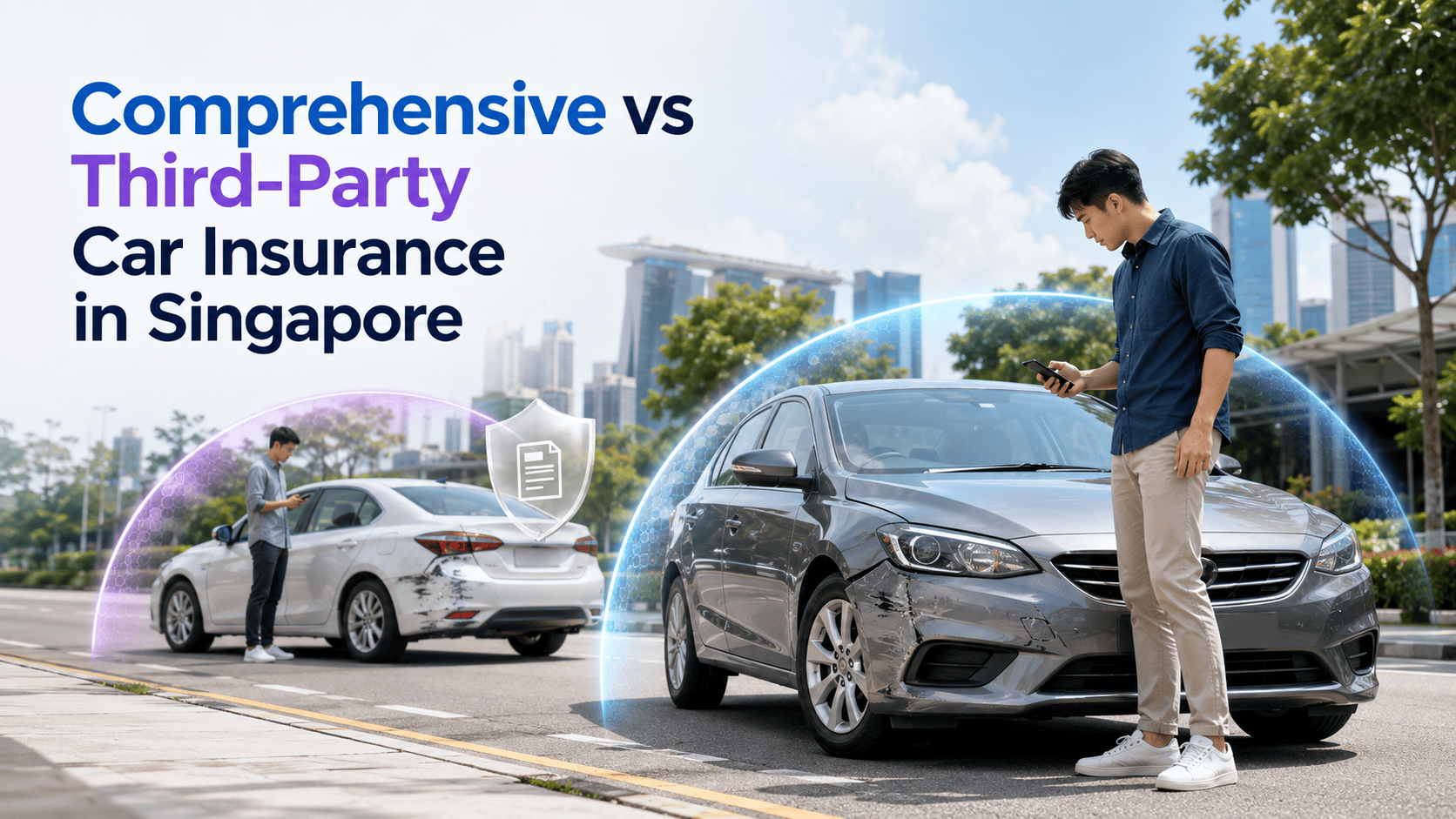
Choosing car insurance is not only about comparing premiums. The type of coverage you select determines what the policy may cover if your vehicle is involved in an accident, damaged, stolen or affected by another insured event.
In Singapore, the three common types of motor insurance are:
- Third-Party Only
- Third-Party, Fire and Theft
- Comprehensive
Understanding the differences can help you decide which type of car insurance is more suitable for your vehicle, budget and driving needs.
What Is Third-Party Car Insurance?
Third-Party Only insurance is the most basic form of motor insurance.
It generally covers your legal liability if you cause:
- Injury or death to another person
- Damage to another person's vehicle
- Damage to third-party property
For example, if you are responsible for an accident that damages another car, the third-party portion of your policy may cover the eligible claim made by the other party, subject to the policy terms.
However, Third-Party Only insurance generally does not cover accidental damage to your own vehicle.
If your car is damaged in an accident for which you are responsible, you will normally need to pay for your own repairs.
What Is Comprehensive Car Insurance?
Comprehensive car insurance generally provides the broadest of the three common coverage types.
In addition to third-party liability, it may cover accidental loss of or damage to your own vehicle, subject to the policy's terms, exclusions and excess.
Depending on the policy, comprehensive insurance may provide coverage for:
- Accidental damage to your own car
- Third-party injury or property damage
- Fire
- Theft
- Windscreen damage
- Flood or windstorm damage
- Towing following an accident
- Personal accident benefits
- Medical expenses
- Damage caused by falling objects
- Other insured events stated in the policy
Some benefits may be included automatically, while others may only be available as optional add-ons.
The word "comprehensive" does not mean that every possible loss is covered. Policy limits, exclusions, reporting requirements and excesses still apply.
Comprehensive vs Third-Party Insurance: Key Differences
| Area | Comprehensive | Third-Party Only |
|---|---|---|
| Third-party injury liability | Generally covered | Generally covered |
| Third-party property damage | Generally covered | Generally covered |
| Accidental damage to your own car | Generally covered | Generally not covered |
| Fire damage to your own car | Usually covered | Not usually covered |
| Theft of your own car | Usually covered | Not usually covered |
| Windscreen coverage | May be included or optional | Generally not covered |
| Optional benefits | More commonly available | Usually limited |
| Premium | Generally higher | Generally lower |
| Own-damage repair costs | May be claimable, subject to terms | Usually paid by the car owner |
This comparison is general. Actual coverage differs between insurers and policies. Source: Motor Insurance Consumer Guide.
Comprehensive Insurance May Not Always Cost More
Comprehensive insurance generally costs more because it provides broader coverage, including eligible damage to your own vehicle.
However, the premium is not determined by coverage type alone. Insurers may also consider:
- Driver's age and experience
- Claims history
- No-Claim Discount
- Vehicle make and model
- Vehicle age and value
- Repair costs
- Engine capacity or performance
- Vehicle usage
- Named drivers
- Workshop arrangement
- Policy excess
- Insurer's underwriting requirements
A comprehensive policy may sometimes be priced closer to a third-party policy than expected, particularly after applying an eligible NCD. It is therefore worth obtaining actual quotations instead of assuming that third-party insurance will always provide substantial savings.
Situations Where Comprehensive Insurance May Be Suitable
Comprehensive insurance may be worth considering if:
- Your vehicle has a relatively high market value
- You would face difficulty paying for major repairs yourself
- Your car is still under financing
- Your financing agreement requires broader coverage
- Your vehicle is new or relatively new
- You depend heavily on the car for daily transport
- Your vehicle requires specialised or costly repairs
- You want protection against theft, fire or accidental own damage
- You prefer access to a wider range of optional benefits
It may also be relevant for electric vehicles, premium cars or vehicles with expensive components, although the actual protection offered should be checked carefully.
Situations Where Third-Party Insurance May Be Considered
Third-Party Only insurance may be considered if:
- Your vehicle has a relatively low market value
- The cost of comprehensive coverage is high compared with the car's value
- You are prepared to pay for your own repairs
- You mainly want to meet the required third-party liability coverage
- The vehicle is no longer under financing
- You understand and accept the more limited protection
A lower-value vehicle does not automatically mean third-party insurance is the correct choice. Consider whether you could comfortably bear the cost of repairing or replacing the car if it were seriously damaged.
Choosing Between Comprehensive and Third-Party Insurance
Before deciding, ask yourself:
- What is the current value of my car?
- Can I afford to pay for major repairs or replacement myself?
- Is the vehicle still under financing?
- How much is the premium difference?
- What excess applies to each policy?
- Where can the vehicle be repaired?
- Who regularly drives the car?
- Are fire and theft important concerns?
- What optional benefits do I need?
- What are the main exclusions?
The right choice depends on your circumstances. Comprehensive insurance provides broader protection, while third-party insurance offers more limited coverage and may come with a lower premium. If you are weighing this up at renewal, our guide on what to check before renewing your car insurance covers the other terms worth reviewing.
Frequently Asked Questions
Is third-party insurance legal in Singapore?
Third-party insurance generally provides the minimum required protection against liability for injury or death caused to other parties. The policy must meet the applicable legal requirements.
Does third-party insurance cover my own car?
Third-Party Only insurance generally does not cover accidental damage to your own vehicle.
Is comprehensive insurance compulsory?
Comprehensive insurance is not generally the minimum coverage required by law. However, it may be required under a vehicle financing agreement.
Can I change from comprehensive to third-party insurance at renewal?
You may be able to do so, subject to the insurer's acceptance and any financing conditions. Review the reduced coverage carefully before changing.
Is comprehensive insurance always better?
It offers broader coverage, but whether it is suitable depends on the vehicle's value, premium, repair costs, financing arrangements and your ability to bear an uninsured loss.
What is the difference between Third-Party Only and Third-Party, Fire and Theft?
Third-Party, Fire and Theft insurance generally adds protection for your own vehicle against fire and theft. Third-Party Only insurance generally does not include these risks.
Does third-party car insurance cover driving in Malaysia?
Generally, yes. Most Singapore third-party car insurance policies provide coverage for driving in Peninsular Malaysia. However, the coverage area, limits and conditions may vary between insurers. Check your policy wording or confirm with your insurer or broker before travelling.
This article provides general information only and does not constitute personal insurance advice. Coverage, premiums, benefits, excesses and eligibility are subject to the respective insurer's policy terms, exclusions and underwriting requirements.